Citizens of Rock n' Roll,
The first version of this article claimed I had made a “$500K music video for almost nothing.” It was a good headline and a bad comparison.
The $500,000 figure was a general comparison, not an established budget for this project. High-end animated and effects-heavy videos can cost enormous amounts, but attaching one dramatic figure to this project implied a precision I did not have.
The honest version is more useful: I could not afford to create this music video through a conventional production process. AI-assisted tools made a version of the idea possible. Without them, the video would not exist.
The project deserved a world
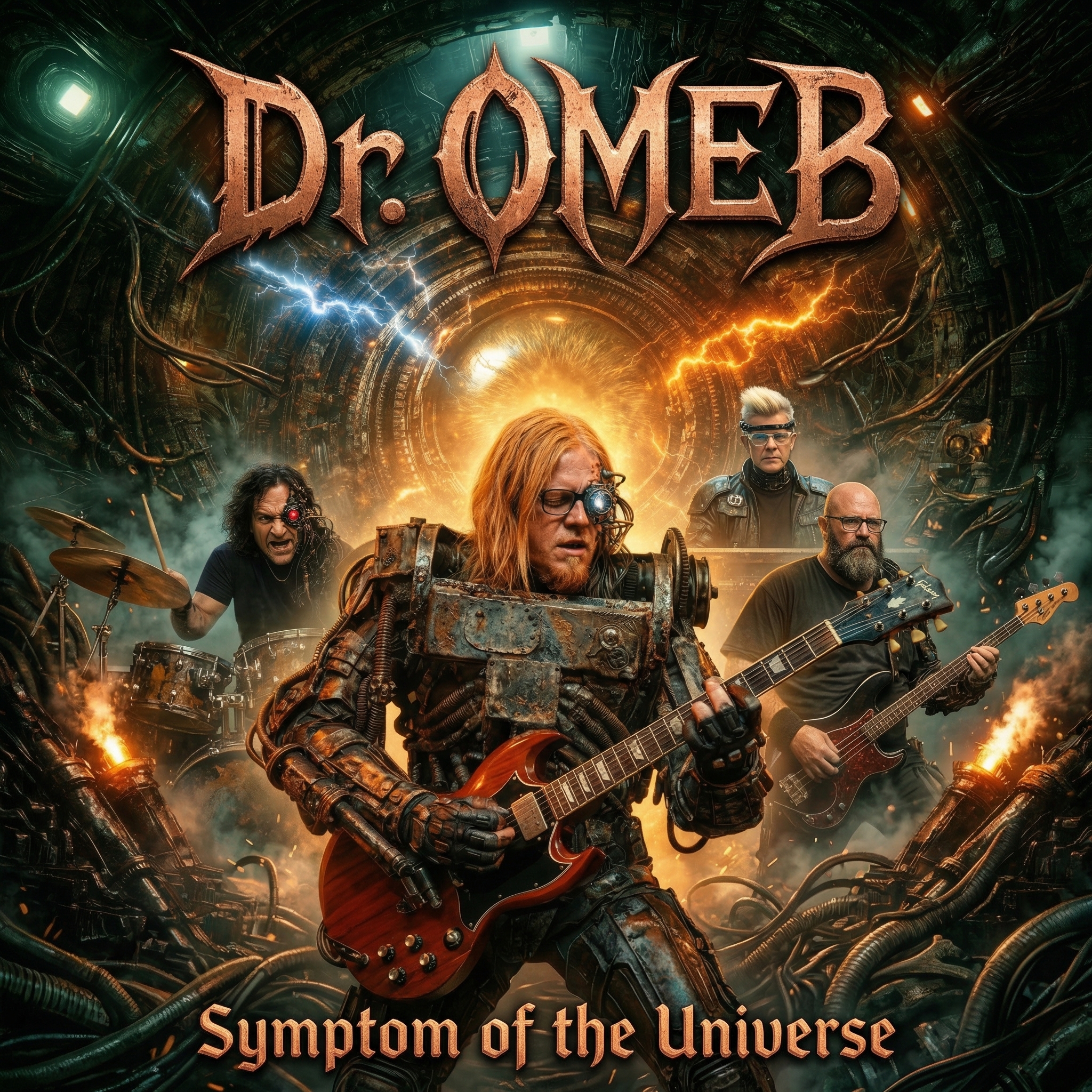
My cover of Black Sabbath’s “Symptom of the Universe” features Vinny Appice on drums. The track was produced, mixed, and mastered by Sefi Carmel at Soundtrack Creation in London. The recording already carried more weight than an ordinary content post. I wanted the visual treatment to feel equally ambitious: dark, biomechanical, surreal, and large enough for the song.
I did not have the budget for sets, costumes, a large crew, extensive compositing, custom animation, and weeks of post-production. I did have editing experience, a specific visual direction, access to several emerging tools, and the willingness to spend a ridiculous number of hours making imperfect systems cooperate.
The workflow
1. Develop the visual language
I used Gemini as a prompt-development and planning partner. The useful work was not asking for “a cool metal video.” It was defining the environment, texture, palette, camera behavior, recurring motifs, and the rules that should make separate shots feel as if they belonged to one world.
Prompting did not replace art direction. It made the art direction explicit.
2. Generate characters and environments
Kling was useful for some likeness-driven shots. Google Flow handled portions of the environmental and atmospheric generation. Their strengths and behavior were different, and neither produced a finished scene every time.
Tools change quickly, so this is a production record—not a permanent buying recommendation.
3. Attempt performance and lip synchronization
Runway handled portions of the lip-sync work. “Handled” should not be read as “solved.” Some outputs worked inside the heightened science-fiction style. Others drifted, softened facial identity, changed hair, or created mouth motion that belonged in a completely different circle of hell.
4. Edit the actual video
VEGAS Pro is where the project became a music video. I selected clips, rejected far more than I used, synchronized edits to the recording, created the sequence, controlled pacing, and hid generation failures through cut timing and visual continuity.
The generative systems made footage. Editing made meaning.
What the glossy version leaves out
The project took more than sixty hours. That labor matters. “AI made it” is no more complete than saying a camera made a film.
The workflow included:
- failed generations and repeated credit consumption;
- faces that changed between shots;
- instruments that grew strings, lost strings, or turned into objects no luthier should be forced to explain;
- characters whose clothing and body proportions drifted;
- slow rendering and queues;
- shots that looked impressive alone but broke the visual continuity of the sequence;
- and a great deal of manual editorial judgment.
I also used subscriptions and credits across multiple projects, so I do not have a clean, defensible “this exact video cost $X” figure. The direct cash cost was dramatically lower than conventional production, but it was not nothing, and the time cost was substantial.
Did this take work away from a production company?
In this case, no conventional production was waiting to be commissioned. I did not have a five- or six-figure visual budget. The realistic alternatives were an AI-assisted video, a much simpler performance edit, or no full video.
That does not settle the entire labor debate around generative AI. Other projects do replace paid creative work. Questions about training rights, compensation, disclosure, and the economic pressure placed on artists remain legitimate.
It does show that the technology can create a new production category for independent musicians: ideas that were previously abandoned because the available visual ambition and the available budget had no overlap.
What remained human
The song. The performances. The collaboration. The visual concept. The selection. The sequence. The timing. The decision to keep trying after the thirty-seventh wrong face.
Most important, the responsibility remained human. I chose what entered the final cut and how the AI-assisted material was represented.
This is why I resist both easy stories. “AI did everything” erases the direction and labor. “AI is just another button” understates how radically it changed what footage I could create.
The independent-artist lesson
Do not begin with the tool. Begin with the project that cannot currently exist.
Then ask:
- Which parts require real performance or documentary truth?
- Which parts can be generated, composited, or simulated responsibly?
- What visual rules will hold the sequence together?
- How much time and credit waste can the project tolerate?
- What will the audience value beyond the novelty of AI?
The novelty wears off. The song and the story have to remain.
I did not make a $500,000 music video. I made the video I was capable of directing with the resources I actually had. For an independent artist, that is the breakthrough worth talking about.
Join the Congregation
Rock n' Roll Church streams live every Sunday at 9:00 AM Eastern. Come for the music. Stay for the people who still believe rock deserves a room.